
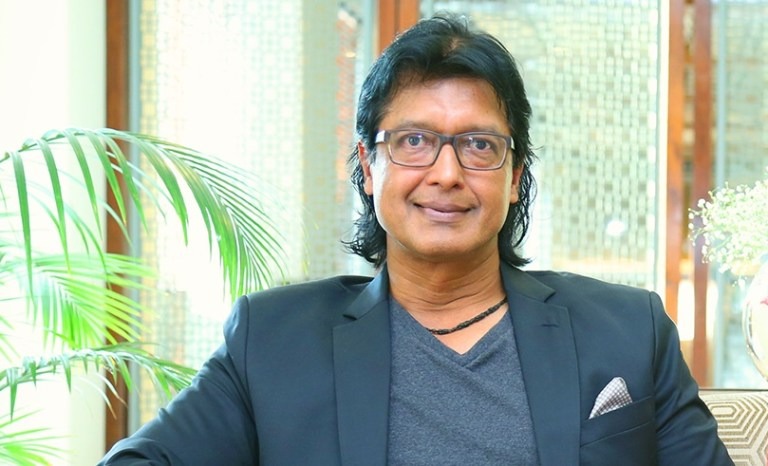
Rajesh Hamal is one of the most iconic and influential figures in Nepal’s film industry, often referred to as the “MahaNayak” (The Greatest Actor). Born on June 9, 1964, in Tansen, Nepal, he has become a household name in Nepali cinema over his prolific career that spans several decades. His journey to stardom began in the early 1990s, and he dominated the Nepali film industry throughout the 1990s and 2000s. Hamal is not only celebrated for his remarkable acting but also for his contribution to the cultural landscape of Nepal through his work in films, television, and social causes.
Early Life and Education:
Rajesh Hamal was born to Chuda Bahadur Hamal and Renu KC. His father, a former ambassador to Pakistan, had a significant diplomatic career, but Rajesh’s relationship with his father was distant. Despite his father’s diplomatic role, Hamal was raised mostly in Nepal and attended private schools till grade 8. His teenage years took a turn when he moved with his father to Moscow, Russia, where he lived for several years, completing his higher education. Rajesh Hamal later attended the University of Delhi, where he earned a Master’s degree in English literature. His time in Russia and India shaped his worldview and exposed him to different cultures, which later influenced his acting.
Entry into the Film Industry:
Before venturing into films, Hamal worked as a model in India, particularly for a magazine called Fashion Net, and participated in fashion shows organized by the Indian Embassy Women’s Association in the late 1980s. However, his true breakthrough in the entertainment world came through acting.
Hamal’s first significant film role came in 1991, in the film Yug Dekhi Yug Samma, directed by Deepak Rayamajhi. While it wasn’t his first film, it marked the beginning of his successful career in Nepali cinema. His debut film, Yug Dekhi Yug Samma, became a huge hit, making him a national star. The film was also the beginning of his long collaboration with director Deepak Rayamajhi. Later, in 1992, Deuta (Father), which he starred in alongside Shrawan Ghimire, further cemented his status as a star. The film became a huge success, and Hamal’s performance was widely appreciated, establishing him as one of Nepal’s most promising actors.
Rise to Stardom:
Throughout the 1990s and 2000s, Hamal’s dominance in the Nepali film industry grew steadily. He became a household name with a string of hit films. The 1990s were especially crucial for his career, as he consistently delivered strong performances, becoming the undisputed “superstar” of Nepali cinema. His films like Sadak (1994), Prithvi (1994), Simana (1996), Chadni (1999), and Basanti (2000) became commercial successes and helped shape the era of Nepali films. His powerful screen presence, combined with his deep voice and charismatic performances, made him a beloved figure for Nepali moviegoers. His portrayal of heroic roles, filled with intense emotions and action, resonated with audiences across the country.
One of his most memorable films from the 1990s was Basanti (2000), which became an iconic film. The film, based on a novel by Diamond Shumsher Rana, was a historical drama, and Hamal’s portrayal of Gagan Singh Khawas was widely praised. The movie was not only commercially successful but also became one of the most respected films of that time, cementing his place as the “Mahanayak” of Nepali cinema.
Peak of Career:
During the 1990s, Rajesh Hamal dominated the Nepali film industry. His ability to portray both heroic and complex characters, combined with his undeniable on-screen charisma, earned him the love and admiration of audiences across Nepal. Films like Sadak (1994), Prithvi (1994), and Simana (1995) are still fondly remembered for his powerful performances. Hamal’s films often featured intense drama, action, and romance, and his characters became iconic representations of the Nepali ideal hero.
One of the most defining aspects of his career is his string of consecutive hits. He was not only the most bankable actor but also the face of Nepali cinema during this period. His collaboration with veteran directors like Tulsi Ghimire in Deuta and Kasam and with actors like Karishma Manandhar, Gauri Malla, and Nikhil Upreti resulted in multiple blockbuster films that are still watched by many today.
Hamal also starred in Basanti (2000), which was one of his favorite roles. The film, directed by Neer Shah, was a huge success and showcased his versatility as an actor. Hamal’s portrayal of Gagan Singh Khawas in Basanti earned him further recognition, cementing his place as a central figure in Nepali cinema.
In addition to his acting career, Rajesh Hamal became a prominent figure in Nepali television. In 2004, he debuted as a television host on Wai Wai Quiz Whiz, one of the most popular TV shows in Nepal. His presence on television, alongside his film career, made him an even more influential figure in the country.
Acting Break and Social Work:
By the late 2010s, Rajesh Hamal started taking fewer acting roles and became more involved in social work, charity, and youth empowerment. He dedicated much of his time to helping those in need and has been associated with numerous charitable initiatives. In addition to his acting, Hamal has actively worked on supporting education and social causes in Nepal.
During this period, Hamal made occasional appearances in music videos, including the popular Malingo and Shailung by Bikas Rana. These music videos kept his connection to the Nepali audience alive. He also appeared on comedy shows like Mundre Ko Comedy and Dancing with Stars as a guest, which further helped him maintain his popularity among his fans.
Television Career:
Apart from his film career, Rajesh Hamal also became a popular television host. He became a familiar face on TV when he hosted the Nepali version of Who Wants to Be a Millionaire? in 2019, which was titled Ko Bancha Crorepati. His charismatic and engaging presence made him a natural for the role, and the show’s success was partly due to his hosting style.
Hamal also served as a judge for several seasons of the Miss Nepal pageant, with notable roles as the chief judge in 1997 and 2007, where he played a major role in selecting the winners. His association with Miss Nepal helped further solidify his influence and popularity in Nepal.
Return to Acting:
After taking a long hiatus from acting, Rajesh Hamal made a major return to films in 2024. He signed on for a major role in the film Narasimha Avtar, which marks his first comeback film after a seven-year break. The film, directed by Diwakar Bhattrai, is currently in production, with filming starting in September 2024. His return to the silver screen has generated excitement among fans, and there is widespread anticipation for his role in the film.
Personal Life:
Rajesh Hamal’s personal life has also drawn significant media attention. In 2004, he met Madhu Bhattarai at the Lux Beauty Pageant, and the two developed a relationship. He proposed to Madhu in May 2014, and they married soon after in a private ceremony. Despite being a public figure, Hamal has kept much of his personal life private, though he has occasionally opened up about his regrets about not spending enough time with his father before he passed away.
Awards and Recognitions:
Rajesh Hamal’s contribution to Nepali cinema has been widely recognized through numerous awards. He has won several National Film Awards, including Best Actor for films like Deuta (1991), Prithvi (1994), and Basanti (2000). Throughout his career, he has also won awards for Best Supporting Actor, Best Actor in Comic Roles, and Best Comedian, among others. His impact on Nepali cinema is unparalleled, and his name is synonymous with the golden era of Nepali movies.
In addition to his film awards, Hamal has been honored by the Nepalese government for his contributions to the entertainment industry. He has also received recognition for his social work, including helping in the reconstruction efforts following the devastating 2015 Nepal earthquake.
Legacy: