
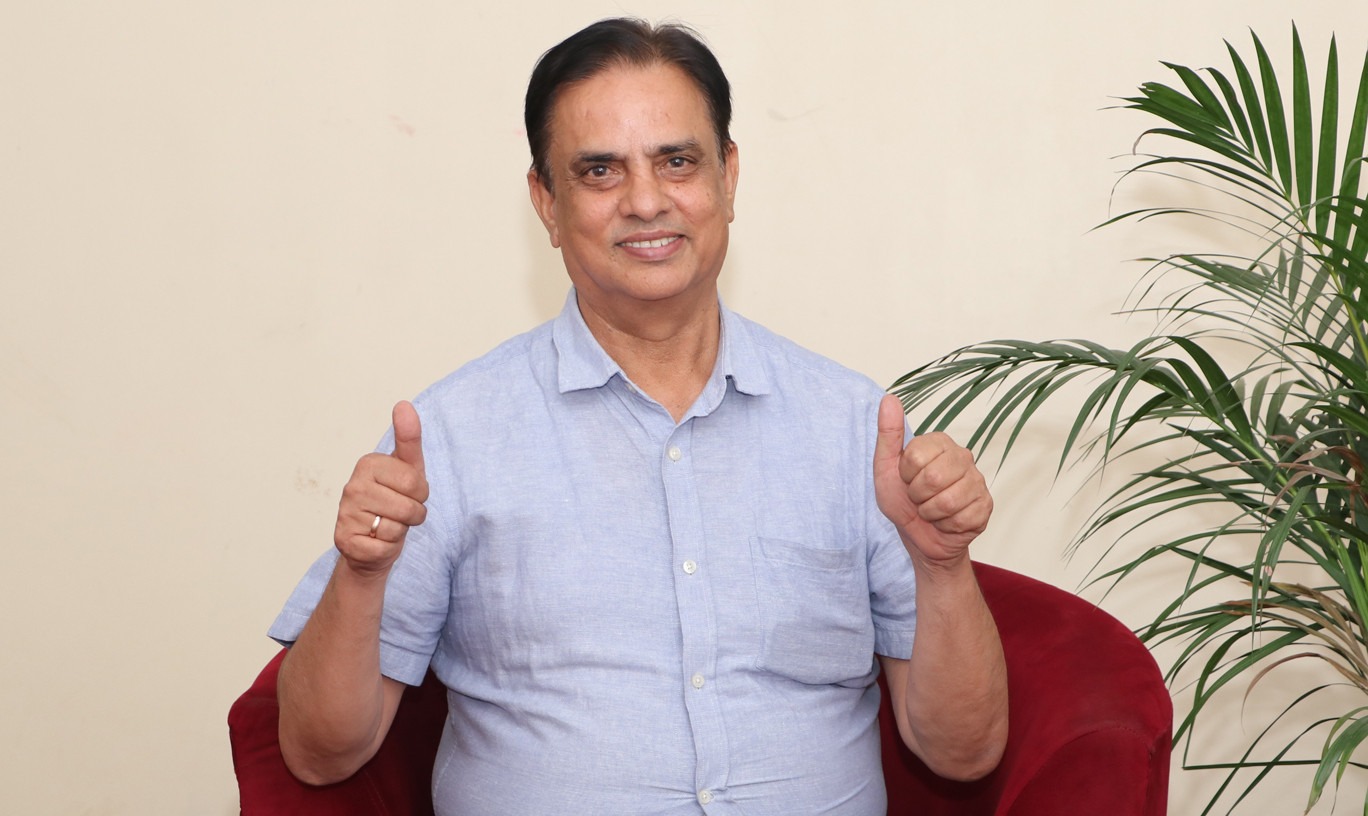
Hari Bansha Acharya is a renowned Nepalese actor, comedian, director, singer, and writer who has made significant contributions to the Nepali entertainment industry. With a career spanning decades, Acharya is most widely known for his role in the iconic comedy duo MaHa Jodi, alongside fellow comedian Madan Krishna Shrestha. His ability to blend method acting with comedic timing has made him one of the most beloved figures in Nepali entertainment.
Early Life and Personal Background
Hari Bansha Acharya was born on 27 Kartik 2014 BS (13 November 1957 AD) in Gairidhara, Kathmandu, to father Homanjaya Acharya and mother Ganesh Kumari. His early life was rooted in the cultural and social fabric of Kathmandu, which would later shape his career in entertainment. Hari met his first wife, Meera Acharya, in 1982. They had two sons, Trilok Acharya and Mohit Acharya. Unfortunately, Meera passed away in 2011 after battling heart disease.
In 2012, Acharya remarried Ramila Pathak, and in 2015, he founded The Meera Centre, a health and educational facility dedicated to the memory of his late wife. The centre focuses on the development of children under five years, aiming to provide them with holistic care and opportunities for growth.
Career Beginnings
Acharya’s journey into the entertainment industry began in 1974 (2031 BS) when he joined Radio Nepal, the only radio station in Nepal at the time. He worked alongside famous personalities like Hari Prasad Rimal and Jitendra Mahat Avilashi. This exposure to the world of broadcasting laid the groundwork for his future career in television, theater, and film. In 1975 (2032 BS), he joined Rastriya Naach Ghar, a pivotal step in his entertainment career. Acharya was also involved in the Gaijatra Mahotsav in 1977 (2034 BS), which is a significant event in Nepali theater. His early experiences in the radio and theater helped hone his comedic timing and acting skills, which would later define his career.
Formation of MaHa Jodi and Rise to Fame
One of the defining aspects of Hari Bansha Acharya’s career is his partnership with Madan Krishna Shrestha, with whom he formed the legendary comedy duo MaHa Jodi. The duo became a cultural phenomenon in Nepal, known for their witty humor and clever social commentary. Together, they produced numerous comedy sketches and television programs that resonated with the Nepali audience. Their chemistry on and off the screen is one of the key reasons behind their enduring popularity.
Acharya’s performance in various television programs, such as Madan Bahadur Hari Bahadur, 50/50, Lal Purja, Pandra Gatay, and Bhakunde Bhoot, became a significant part of Nepali television culture. His character portrayal in these series, particularly in Hari Bahadur, is etched in the minds of many Nepali viewers.
In the film industry, Acharya gained recognition with his performance as Arjun in the 1997 patriotic drama Balidaan. His portrayal of Arjun is considered one of his finest performances. He went on to star in numerous hit films, including Lovipapi, Filim, Rajamati, Silu, Je Bho Ramrai Bho, and Tan Ta Sarai Bigris Ni Badri. These films solidified his reputation as a versatile actor capable of handling both comedic and dramatic roles.
In 2018, Acharya and Shrestha reunited for the film Shatru Gate and in 2022 Mahapurush, which was a major commercial success. The film was one of the highest-grossing Nepali films and further cemented their status as one of the most successful comedy duos in Nepali cinema.
Television and Theater Contributions
Hari Bansha Acharya has made significant contributions to Nepali television through his roles in various popular programs. His performance in series like 50/50, Santati Ko Lagi, Pandhra Gate, Bhakunde Bhoot, and Laal Purja is particularly noteworthy. These shows not only entertained the Nepali audience but also played a role in shaping the landscape of Nepali television.
Acharya’s work in theater is another important aspect of his career. He has been part of numerous theater productions, including Yamlok, Paralysis, Anshabandha, Cockfight, Raddi Tokari, and Bigyapan, among others. His performances in these plays, especially Bigyapan, a record-breaking drama in Nepal, earned him widespread recognition and praise for his exceptional acting skills. Acharya’s stage presence is characterized by his ability to capture the audience’s attention and evoke both laughter and deep emotional responses.
Music and Publications
In addition to acting and comedy, Hari Bansha Acharya is also a talented singer. He has sung several popular songs, including Khokro Sarangi, Barabar Timro Mero Maya Barabar, Chanchale Chanchale, Hamri Aama, Jhyaun Jhyaun Jhyaukiri, Mutu Fasya Thyio, A Keta Madalu Padka, and many more. His voice has been appreciated for its emotive quality and ability to connect with the audience.
Acharya is also a published author. He has written several books, including his autobiography China Harayeko Manchhe, and Hari Bahadur, a novel. His literary work reflects his deep understanding of Nepal’s social and political landscape, and his contributions to literature are equally significant as his contributions to the arts.
Social and Political Involvement
Hari Bansha Acharya has been an active participant in Nepal’s social and political life. He played a prominent role in the April Uprising, which resulted in the dethroning of the monarchy in Nepal. His efforts during the People’s Movement of 2006 (2062–2063 BS) were instrumental in mobilizing the masses and advocating for democratic reforms. This involvement has further endeared him to the people of Nepal, who see him not only as an entertainer but also as a social and political advocate.
Acharya’s social consciousness is also reflected in his humanitarian work. He has held numerous prestigious positions, including serving as the Ambassador for the UN World Food Program in Nepal, the Chairman of the Kathmandu Animal Treatment Centre, and the Executive Director of MaHa Sanchar. He is also a founding member of the Jana Andolan Health Relief Fund and has served on the boards of several health and social organizations in Nepal.
Awards and Honours
Throughout his illustrious career, Hari Bansha Acharya has received numerous awards and recognitions for his contributions to Nepali entertainment and society. He has been honoured with NEFTA (Nepal Film Technician Association) awards and OFA (Organization of Film Actors) awards. In 2070 BS, he was honoured for his work in the comedy genre at the Hasya Byangya Hijo Aaja Bholi event. He also received the prestigious Jagadamba Shree Puraskar, a national award recognizing his lifelong contributions to Nepali art and culture.
Legacy and Impact
Hari Bansha Acharya’s impact on Nepali entertainment is immeasurable. He has touched the lives of millions through his films, television programs, stage performances, and humanitarian efforts. His unique blend of humor and deep social insight has made him a household name in Nepal. Acharya’s legacy is not only confined to his work as an entertainer but also as a philanthropist, advocate for democratic values, and a cultural icon.
As a member of MaHa Jodi, Acharya’s influence continues to resonate in Nepali comedy, shaping the future of humor in the country. His work will undoubtedly be cherished for generations to come, and his contribution to Nepali culture will be remembered as one of the cornerstones of modern Nepali entertainment.
Conclusion
Hari Bansha Acharya is a name synonymous with Nepali entertainment. His long and successful career in acting, comedy, music, and literature, combined with his active participation in social and political causes, has made him an integral figure in Nepali society. Whether through his iconic roles with Madan Krishna Shrestha in MaHa Jodi, his memorable performances in Nepali films and television, or his contributions to the social and political spheres, Hari Bansha Acharya’s influence remains profound. His legacy will continue to inspire future generations of Nepali artists and activists.