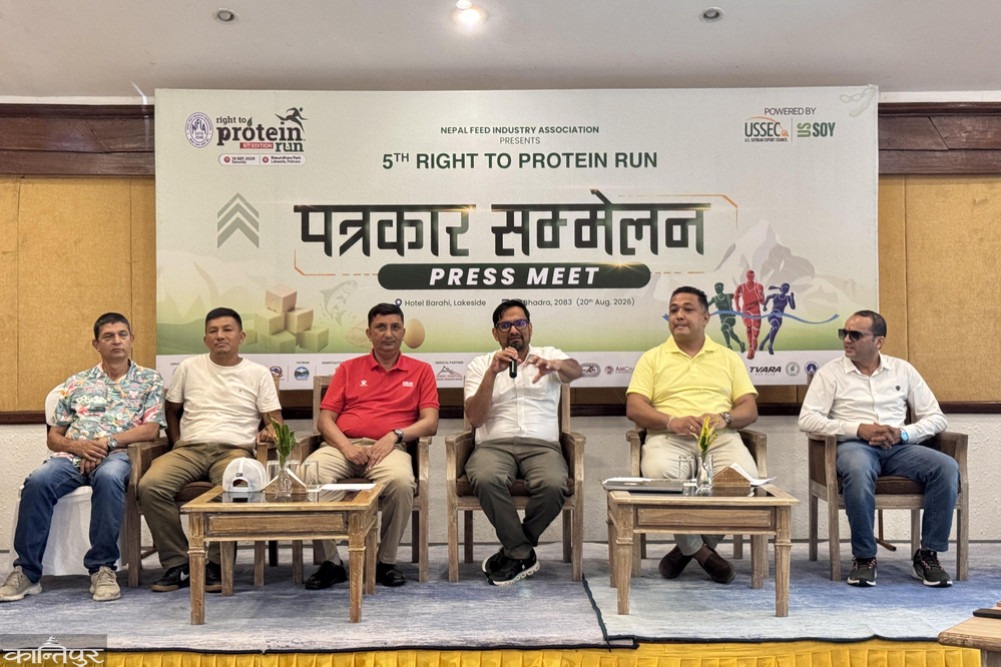
KATHMANDU: The fifth edition of the ‘Right to Protein Run 2026’ is set to take place in Pokhara on October 3, with more than 4,000 runners expected to participate.
Organized by the Nepal Feed Industries Association (NFIA), with the US Soybean Export Council (USSEC) as the principal sponsor, the event will receive technical support from the Nepal Athletics Association. The event aims to promote awareness of nutrition, physical fitness and healthy lifestyles while connecting sports with health, agriculture and tourism.
The previous four editions of the run were held in Kathmandu.
According to the organizers, nutrition and food security remain major challenges in Nepal. They estimate that more than 4.6 million people are facing food insecurity, while malnutrition, stunting and anemia continue to pose significant public health concerns. The organizers also claim that Nepal’s average daily per capita protein availability is around 46 grams, compared with a global average of 77 grams.
The ‘Right to Protein Run’ campaign has been running since 2019 to raise awareness about protein requirements, quality and accessible sources. Event coordinator Samej Rajbhandari said the initiative aims to take discussions about nutrition beyond conferences and into communities.
The event will feature eight categories, including a 21-kilometer half marathon for men and women, a 10-kilometer open men’s race and a 5-kilometer open women’s race. There will also be a 5-kilometer race for male students up to Grade 12, a 3-kilometer race for female students, and 3-kilometer wheelchair races for both men and women.
The top five finishers in each category will receive cash prizes, with a total prize purse of Rs 1.6 million. After a 25 percent tax deduction, the total cash payout will amount to Rs 1.28 million.
The race will start and finish at Basundhara Park in Lakeside, passing through Hallan Chowk, Khahare, Sedi, Khapaudi and Pame.
The organizers said hydration stations, first aid, ambulances and emergency medical services will be arranged along the route in coordination with local authorities, security agencies, traffic police and health workers.
This year’s campaign will also promote locally available protein sources such as eggs, chicken, fish, milk, soy, tofu, paneer, lentils and pulses. The organizers expect the event to help promote Pokhara as a sports and health tourism destination while providing emerging runners with a platform to compete.